AISI 310MoLN (UNS S31050) Forged Forging Steel Parts
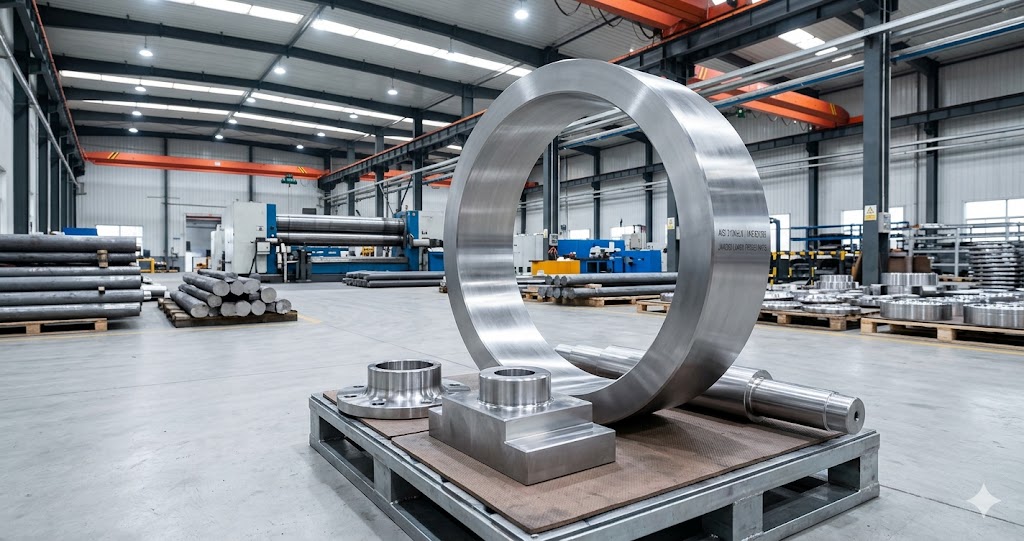
High-quality AISI 310MoLN forged components manufactured by Jiangsu Liangyi in Jiangyin, Jiangsu Province, China
AISI 310MoLN (UNS S31050) — Key Facts at a Glance
- Also known as:
- UNS S31050 · X2CrNiMoN25-22-2 · EN 1.4466 · 310MoLN
- Material type:
- Fully austenitic stainless steel (nitrogen-strengthened)
- Key alloying elements:
- Cr 24–26% · Ni 20.5–23.5% · Mo 1.6–2.6% · N 0.09–0.15% · C ≤0.02%
- Tensile strength:
- 540–740 N/mm²
- Max. operating temperature:
- 1,100°C (2,010°F)
- Primary applications:
- Urea plants · oil & gas · power generation · petrochemical · high-temperature industrial
- Available forms:
- Bars · seamless rolled rings (≤6 m dia.) · shafts · discs · pipes · custom parts
- Weight range:
- 30 kg – 30,000 kg per piece
- Manufacturer:
- Jiangsu Liangyi Co., Limited · Jiangyin, Jiangsu Province, China
- Certifications:
- ISO 9001:2015 (factory certified) · EN 10204 3.1 MTC (standard) · EN 10204 3.2 (via customer-nominated TPI)
- Manufactured to:
- ASTM A182 · DIN EN 10088-3 · JIS G4303 · customer-specified standards
Jiangsu Liangyi Co., Limited is a professional ISO 9001:2015 certified manufacturer of AISI 310MoLN (UNS S31050) stainless steel open die forging parts and seamless rolled steel forged rings, located in Jiangyin City, Jiangsu Province — China's premier forging industry hub. With over 25 years of specialized experience, We produce high‑quality 310MoLN forged parts to internationally recognized technical standards, including ASTM A182, DIN EN 10088‑3, and JIS G4303, all parts are made based on each customer’s purchase order specifications.
Our factory covers 80,000㎡ and has advanced forging equipment including 6300-ton hydraulic presses, 5-meter seamless rolling machines and comprehensive testing laboratories. We provide a full range of service from steel melting, forging, heat treatment to final machining. We provide AISI 310MoLN forged parts with weight ranges from 30kg to 30,000kg, with an annual production capacity of 120,000 tons. Our products are exported to customers in over 50 countries around the world, and they are used for extreme industrial conditions such as oil and gas, power generation, petrochemicals and more.
As a top forging manufacturer in China's Jiangsu Province, we specialize in producing custom forged parts in a wide range of materials including stainless steel, carbon steel, alloy steel, and nickel alloys. Our AISI 310MoLN forgings are particularly renowned for their excellent corrosion resistance and high-temperature performance.
Available AISI 310MoLN Forged Product Shapes & Dimensions
We manufacture a full range of AISI 310MoLN (UNS S31050) forged steel products in all kinds of shapes and custom sizes to meet your specific project requirements. All our products are made at our Jiangyin facility in Jiangsu Province, China, using the latest forging technology:
- Forged Bars & Rods: Round bars (up to 2000mm diameter), square bars, flat bars, rectangular bars and solid rods
- Seamless Rolled Rings: Custom forged rings are up to 6 meters in diameter and 30 tons in weight
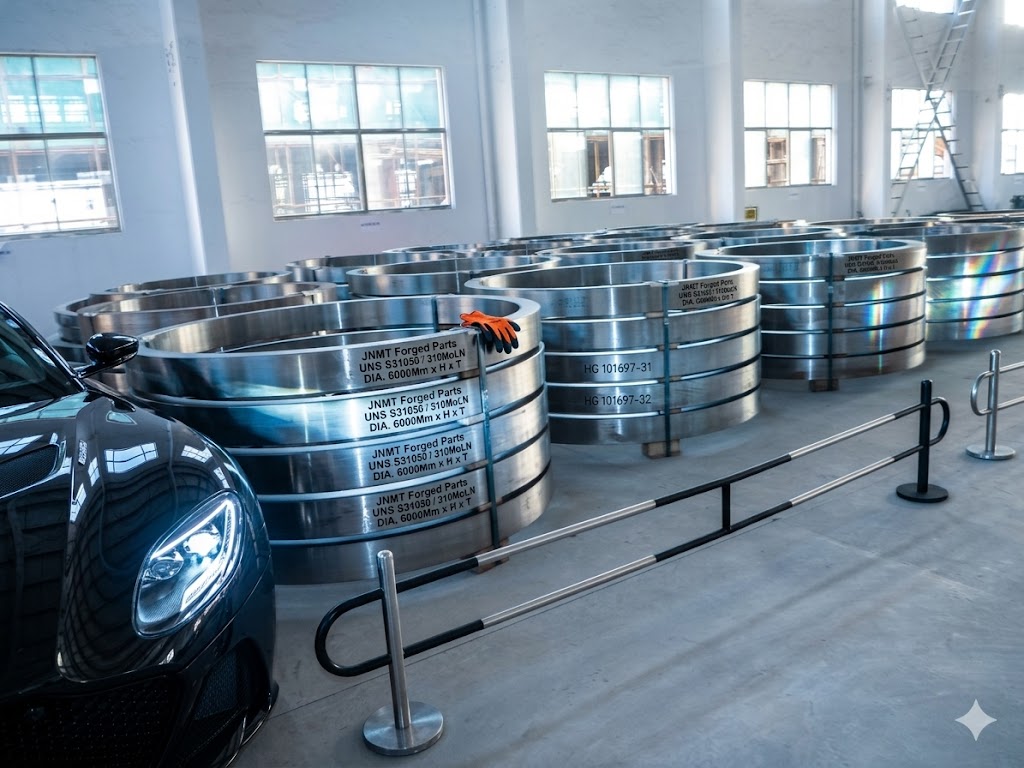
Large diameter AISI 310MoLN seamless rolled rings produced at our Jiangyin manufacturing facility in Jiangsu, China
- Hollow Components: Hubs, housing shells, sleeves, bushes, bushing cases and heavy-wall hollow bars (up to 3000mm OD)
- Flat Products: Discs, disks, blocks, plates and tube sheets
- Piping Products: Seamless pipes, tubes, tubings, piping shells, casings, barrels and pressure vessel housings
- Shafts & Rotating Components: Step shafts, gear shafts, turbine shafts and pump shafts are up to 15 meters in length
All our AISI 310MoLN forged products can be supplied in the as-forged, heat-treated, or fully machined condition, depending on your requirements. We also offer comprehensive testing and inspection services to make sure all parts have the highest quality.
Industrial Applications & Project Cases of AISI 310MoLN Forged Parts
AISI 310MoLN (UNS S31050) is a fully austenitic stainless steel with an improved chemical composition. It is used for extreme corrosion and high-temperature environments. Its excellent resistance to urea carbamate corrosion, high-temperature oxidation and stress corrosion cracking makes it the best choice material for important applications in the following industries:
Oil & Gas Industry
In the oil and gas sector, AISI 310MoLN is used for parts exposed to sour gas, high pressure and high temperature (HPHT) conditions. Our forged parts have been used in major oilfields across the Middle East, North America and Southeast Asia. As a trusted Chinese manufacturer based in Jiangsu Province, we supply AISI 310MoLN parts to some of the leading oil and gas companies around the world.
- Drilling pipes, tubes, drill rods and heavy-duty drilling collars
- Blowout Preventer (BOP) parts including RAM, annular and dual BOP bodies
- Subsea drilling tools, risers, connectors, flexible joints, seals, flanges and gaskets
- Christmas trees, wellhead spool bodies, cylinders and pressure-containing parts
- Casing heads, tubing heads, casing hangers, tubing hangers and spacer spools
- Downhole drilling tool parts including mud motor splined drive shafts
- Electrical submersible pumps (ESP) motor splined shafts and pump housings
- Double studded adapter flanges, integral mud flanges and studded crosses
Valve Manufacturing
AISI 310MoLN has excellent mechanical properties and corrosion resistance, so that it is the best choice material for high-performance valve parts operating in harsh process environments. Our Jiangyin factory in Jiangsu, China, produces a wide range of AISI 310MoLN valve components for valve manufacturers around the world.
- Valve balls, valve bonnets, valve bodies, valve stems, valve closures and valve seat rings
- Parts for H-type two-way, one-way and back pressure valves, ball valves, check valves and gate valves
- Butterfly valve main shafts, spindles and high-performance butterfly valve (HPBV) shafts for cryogenic service
- Oil measurement valve spools and ultrasonic flow meter bodies
- Venturi cone meter bodies and blocks for precise flow measurement
Power Generation
Our AISI 310MoLN forged parts are used in demanding power generation applications around the world — including conventional thermal power plants and high-temperature process equipment — where long lifetime, dimensional stability and corrosion resistance under elevated temperature are essential. As an experienced Chinese forging manufacturer, we understand the stringent requirements of the power generation industry and deliver parts that meet customer-specified standards.
- Power plant coolant pump parts including pump casing shells and bodies for high-temperature, high-pressure service
- Coolant pump seal chambers and primary loop parts for important thermal power applications
- Turbine and compressor labyrinth shaft seals for power generation equipment
- Turbo centrifugal compressor impellers and shrouded impellers
- Pressure vessel nozzles and heat exchanger parts for thermal power plants
Petrochemical & Fertilizer Industries
AISI 310MoLN was used for urea plant applications, where it outperforms standard stainless steels in resisting corrosion from urea carbamate solutions. Our Jiangsu-based manufacturing facility has extensive experience in producing AISI 310MoLN parts for fertilizer plants around the world.
- Urea plant parts with excellent resistance to high-pressure urea carbamate environments
- It is used for high-pressure stripper parts, urea reactor internals and synthesis loop equipment
- Boiler and heat exchanger parts including tube sheets, baffle plates, nozzles and channel flanges
- Pump parts including pump casings, covers, barrels, impellers, shafts and wear rings
- Swept branches, outlets, steel fittings, swept saddles and transition cones
AISI 310MoLN (UNS S31050) Material Properties & Advantages
AISI 310MoLN is a nitrogen-strengthened fully austenitic stainless steel that is free from intermetallic phases such as intergranular carbide precipitations. The controlled addition of nitrogen stabilizes and strengthens the austenitic phase, significantly improving both mechanical properties and corrosion resistance compared to conventional 310 stainless steel. At our Jiangyin facility in Jiangsu Province, China, we have deep expertise in working with this specialized material.
Key Advantages Over Other Stainless Steels
- Great resistance to urea carbamate corrosion (specifically designed for urea plants)
- Excellent high-temperature oxidation resistance up to 1100°C (2010°F)
- Good resistance to stress corrosion cracking and intergranular corrosion
- Higher strength and hardness compared to standard 304 and 316 stainless steels
- Excellent toughness and ductility at both room and cryogenic temperatures
- Good weldability and formability for custom part fabrication
In addition to AISI 310MoLN, we also manufacture forgings from a wide range of other stainless steel grades, nickel alloys, and carbon and alloy steels to meet different application requirements.
Chemical Composition (Weight %)
| Element | Minimum (%) | Maximum (%) |
|---|---|---|
| Iron (Fe) | 45.2 | 53.8 |
| Chromium (Cr) | 24.0 | 26.0 |
| Nickel (Ni) | 20.5 | 23.5 |
| Molybdenum (Mo) | 1.6 | 2.6 |
| Manganese (Mn) | 0 | 2.0 |
| Silicon (Si) | 0 | 0.5 |
| Nitrogen (N) | 0.090 | 0.150 |
| Carbon (C) | 0 | 0.020 |
| Phosphorus (P) | 0 | 0.030 |
| Sulfur (S) | 0 | 0.010 |
Mechanical Properties (Delivery Condition)
| Property | Value |
|---|---|
| Tensile Strength (Rm) | 540 – 740 N/mm² |
| Yield Strength (Rp0.2) | ≥ 250 N/mm² |
| Elongation (A) | ≥ 35% / 30% |
| Brinell Hardness (HB) | ≤ 240 HB |
Material Comparison Table
| Property | AISI 310MoLN (UNS S31050) | AISI 310S | AISI 316L |
|---|---|---|---|
| Chromium Content | 24–26% | 24–26% | 16–18% |
| Nickel Content | 20.5–23.5% | 19–22% | 10–14% |
| Molybdenum Content | 1.6–2.6% | 0% | 2–3% |
| Nitrogen Content | 0.09–0.15% | 0% | 0% |
| Urea Carbamate Resistance | Excellent | Poor | Poor |
| Maximum Operating Temp. | 1,100°C | 1,095°C | 870°C |
| Yield Strength | ≥ 250 MPa | ≥ 205 MPa | ≥ 170 MPa |
Complete AISI 310MoLN Forging Manufacturing Process
At our Jiangyin manufacturing facility in Jiangsu Province, China, we follow a rigorous 7-step manufacturing process to make sure all AISI 310MoLN forged parts have the highest quality . Our advanced forging equipment and experienced team enable us to deliver consistent quality with every order:
- Raw Material Selection: We buy premium-grade AISI 310MoLN steel ingots only from certified suppliers, with complete traceability from melting to finished product.
- Steel Melting & Refining: We have 30t electric arc furnaces (EAF), ladle refining furnaces (LF) and vacuum degassing (VOD) to get accurate chemical composition.
- Forging: Open die forging using 2000–6300 ton hydraulic presses and 1–5 ton electro-hydraulic hammers to refine grain matrix and improve mechanical properties.
- Seamless Ring Rolling: For ring products, we use 1–5 meter seamless rolling machines to produce near-net-shape rings with great grain flow.
- Heat Treatment: Controlled solution annealing and quenching to improve corrosion resistance and mechanical properties.
- Machining: CNC machining to meet tight dimensional tolerances according to customer drawings.
- Quality Inspection & Testing: Full non-destructive and destructive testing to make sure all parts meet client's specifications.
Our company in Jiangyin, Jiangsu , has advanced equipment to handle all aspects of the forging process, from initial melting to final inspection and delivery. We have successfully completed many projects for customers around the world, earning a reputation for quality and reliability.
Quality Assurance & Testing Standards
All our AISI 310MoLN (UNS S31050) forged parts are given rigorous testing at every stage of production to make sure they meet the highest quality standards. We are certified to ISO 9001:2015 and our products meet internationally recognized technical standards, including ASTM A182, DIN EN 10088-3, and JIS G4303, as specified by each customer. We will deliver products that consistently meet or exceed the requirements specified by our customers.
Comprehensive Testing Capabilities
- Mechanical testing: Tensile testing, Charpy impact testing (−320°F to +350°F) and hardness testing
- Non-destructive testing (NDT): Ultrasonic testing (UT), liquid penetrant inspection (LPI) and magnetic particle inspection (MPI)
- Chemical analysis: Spectrometric analysis to verify chemical composition
- Metallurgical testing: Macro-etching, microstructure analysis and grain size evaluation
- Dimensional inspection: Precision metrology using CMM and advanced measuring equipment
All non-destructive testing is carried out by our qualified in-house NDT personnel, following documented procedures under our ISO 9001:2015 quality management system. For projects requiring third-party witnessed NDT, we coordinate with customer-nominated inspection agencies, who may independently verify the results. Third-party NDT certification to ASNT, PCN, or equivalent schemes can be arranged through the customer’s appointed inspection body.
Mill Test Certificate (MTC) — EN 10204 3.1 & 3.2
EN 10204 3.1 certificates are issued as standard with every order. A 3.1 MTC is prepared and signed by our own authorised quality representative and contains full traceability of test results to the specific product supplied.
EN 10204 3.2 certificates are available when the customer arranges a nominated inspection agency (such as SGS, Bureau Veritas, TÜV, Intertek or their equivalents). These certificates need an independent, accredited third-party inspection body to witness, verify and co-sign the test results. We welcome and accommodate the presence of third-party inspectors at all agreed hold points in our Jiangyin facility.
Both certificate types include:
- Heat number and melting type with full traceability
- Detailed dimension test results
- Complete heat treatment cycle parameters
- Full chemical analysis results including tramp elements
- Individual mechanical test results and hardness values
- Ultrasonic test and surface crack examination results
- Visual and verification inspection confirmations
- Results of any additional tests specified in drawings or orders
AISI 310MoLN (UNS S31050) Physical Properties — Engineer Reference Data
Physical property data is essential for thermal stress calculations, finite element analysis (FEA), and equipment design, yet it is often missing from supplier pages. The values below reflect our in-house measurements on solution-annealed forged billets produced at our Jiangyin facility, cross-referenced against EN 10088-3 reference data. Minor variation from mill to mill is normal due to actual heat chemistry.
| Physical Property | Value | Test Condition / Note |
|---|---|---|
| Density | 7.90 g/cm³ | Room temperature, solution-annealed |
| Melting Range | 1,350 – 1,400°C | Liquidus/solidus range; actual value depends on exact heat chemistry |
| Elastic Modulus (E) | ~200 GPa (20°C) / ~165 GPa (400°C) | Drops ~17% at elevated temperature; critical for thermal fatigue design |
| Thermal Conductivity | 14.0 W/(m·K) at 20°C / 18.5 W/(m·K) at 500°C | Lower than ferritic SS; important for heat exchanger sizing |
| Specific Heat Capacity (Cp) | 490 J/(kg·K) at 20°C | Typical for austenitic grades |
| Linear Thermal Expansion Coefficient | 17.0 × 10⁻⁶ /°C (20–100°C) / 18.5 × 10⁻⁶ /°C (20–500°C) | Higher expansion than carbon steel; must account for in flange design |
| Electrical Resistivity | ~0.85 μΩ·m (20°C) | ~5× higher than carbon steel; relevant for induction heating setups |
| Magnetic Permeability | < 1.02 μ/μ₀ (solution-annealed) | Essentially non-magnetic; heavy cold work may induce slight ferromagnetism |
| Poisson's Ratio | ~0.30 | Standard austenitic value |
Corrosion Resistance of AISI 310MoLN — Technical Deep Dive
Corrosion resistance is the single most important criterion for selecting 310MoLN. Unlike the generic statements found on most material datasheets, we explain how each alloying element contributes to corrosion resistance, what standardized tests actually measure, and how 310MoLN stacks up against the alternative materials our customers frequently consider.
Pitting Resistance Equivalent Number (PREN)
The PREN is a widely accepted single-number index that ranks stainless steels by their resistance to chloride pitting. It is calculated from the alloy's actual certified chemistry using the formula:
Using the minimum guaranteed composition of AISI 310MoLN (Cr 24%, Mo 1.6%, N 0.09%), the minimum PREN is:
At the nominal / mid-range composition (Cr 25%, Mo 2.1%, N 0.12%), the typical PREN is approximately 34–36, placing 310MoLN firmly above the super-austenitic threshold of 32 and well ahead of standard 316L (PREN ≈ 24) and 317L (PREN ≈ 28).
| Grade | UNS / EN | Typical PREN | Classification |
|---|---|---|---|
| AISI 310MoLN | S31050 / 1.4466 | 34–36 | Super-austenitic range |
| AISI 316L | S31603 / 1.4404 | ~24 | Standard austenitic |
| AISI 317L | S31703 / 1.4438 | ~28 | Standard austenitic |
| AISI 310S | S31008 / 1.4845 | ~26 | Standard austenitic (no Mo, no N) |
| Duplex 2205 | S32205 / 1.4462 | ~35 | Duplex (comparable PREN, lower Ni) |
| Super-duplex 2507 | S32750 / 1.4410 | ~42 | Super-duplex (best pitting) |
Urea Carbamate Corrosion — Why 310MoLN Was Specifically Designed for This
Standard austenitic stainless steels experience severe corrosion in urea synthesis loops. The process fluid, ammonium carbamate, is one of the most aggressive corrosive media in the chemical industry.Combined with high temperatures (170–200°C), high pressures (14–25 MPa), and a strongly oxidizing, highly concentrated carbamate solution, this environment breaks down the chromium oxide passive layer on conventional stainless steels at unacceptable rates.
AISI 310MoLN addresses this through a three-pronged metallurgical strategy:
- Very low carbon (≤0.02 wt%): Prevents chromium carbide precipitation at grain boundaries during welding and service exposure, deleting the sensitized zones that are prime sites for intergranular attack (IGA) in urea carbamate environments.
- Elevated chromium (24–26%) + molybdenum (1.6–2.6%): Greatly increases the stability and self-repair speed of the passive oxide layer even under strongly reducing attack from carbamate ions at elevated temperatures. Molybdenum enriches the passive film at the metal-oxide interface, acting as a "corrosion buffer."
- Nitrogen (0.09–0.15%): Stabilizes the austenite phase against sensitization and sigma-phase formation at elevated temperatures, while also increasing pitting resistance by preferentially concentrating at passive film defect sites.
The result is a material that passes the stringent ASTM G28 Method A (boiling 50% H₂SO₄ + Fe₂(SO₄)₃) and ASTM G28 Method B (42% MgCl₂ stress corrosion cracking) qualification tests — both mandatory for urea plant approval by major licensors including Stamicarbon, Saipem (formerly Snamprogetti) and Toyo Engineering.
High-Temperature Oxidation & Hot Corrosion Resistance
Above 600°C, corrosion is dominated by oxidation rather than aqueous corrosion mechanisms. With 24–26% chromium content, 310MoLN forms a dense, adherent, self‑healing Cr₂O₃ protective layer that resists breakaway oxidation in air up to around 1100°C — the same maximum temperature as standard AISI 310S. This makes 310MoLN is the best choice material for cyclic thermal applications, where its molybdenum and nitrogen additions deliver improved creep resistance at intermediate temperatures (600–800°C) compared to standard 310S. In sulphidizing atmospheres (refinery and petrochemical environments containing H₂S), 310MoLN outperforms 316L grades. The higher chromium‑to‑iron ratio in its oxide scale reduces the formation of iron sulphide pathways that lead to rapid corrosion. However, in severely sulphidizing conditions above 700°C, nickel‑base alloys still remain the preferred choice. Our engineering team can recommend the most suitable material for your specific operating conditions.
AISI 310MoLN International Standard Equivalents & Cross-Reference
Procurement engineers often face confusion due to the inconsistent naming of this alloy across various national and industry standards. AISI 310MoLN, UNS S31050, EN 1.4466, and X2CrNiMoN25-22-2 all refer to the same material, although minor differences exist in compositional tolerances between standards.The table below provides the full cross-reference for 310MoLN available from a forging manufacturer, compiled from our library of international specifications used in customer orders over more than 25 years.
| Standard System | Designation | Key Scope / Notes |
|---|---|---|
| AISI / SAE (USA) | AISI 310MoLN | American Iron and Steel Institute designation; most are used commercially |
| UNS (USA) | UNS S31050 | Unified Numbering System; are used in ASTM / ASME purchase orders and material certificates |
| EN (Europe) | 1.4466 / X2CrNiMoN25-22-2 | European material number (1.4466) and chemical short name; covered by EN 10088-3 (bars & forgings) |
| DIN (Germany) | DIN 1.4466 | Legacy German designation; now superseded by EN 10088 but still referenced in older drawings |
| BS (United Kingdom) | BS 310S31 (obsolete) → EN 1.4466 | Old British Standard; UK projects now use EN designations |
| ISO | X2CrNiMoN25-22-2 | ISO 15510 stainless steel classification; aligns with EN designation |
| ASTM (Forgings) | ASTM A182 Gr. F310MoLN | Covers forged or rolled pipe flanges and fittings; our most-ordered ASTM spec |
| ASTM (Bar) | ASTM A276 / A479 Type 310MoLN | Hot-finished or cold-finished bar and shapes |
| ASME (Pressure Vessels) | ASME SA-182 F310MoLN | Equivalent to ASTM A182 with ASME Boiler & Pressure Vessel Code material requirements; commonly specified for pressure-retaining forgings and high-temperature service equipment |
| API (Oil & Gas) | Material referenced in API 6A / 17D | API 6A is a product licence scheme, not a material designation. 310MoLN forgings manufactured to ASTM A182 may be used within API 6A equipment by an API-licensed manufacturer. Jiangsu Liangyi does not hold an API Monogram licence; customers requiring API-stamped equipment should confirm applicable requirements at inquiry stage. |
| JIS (Japan) | SUS 310MoLN (JIS G4303) | Japanese Industrial Standard for stainless steel bars; compositional limits align closely with UNS S31050 |
| GB / GB/T (China) | 022Cr25Ni22Mo2N (GB/T 20878) | Chinese national standard designation; are used when supplying to domestic Chinese projects or for SELO-stamped pressure equipment |
| Proprietary / Trade | Sanicro® 28 (Ni-richer, UNS N08028), Uranus® 65 (approx. UNS N08065) | These are different alloys sometimes positioned as 310MoLN alternatives — not interchangeable without engineering review. Sanicro® is a registered trademark of Sandvik AB; Uranus® is a registered trademark of Industeel/ArcelorMittal. Referenced for technical comparison only; Jiangsu Liangyi has no affiliation with these trademark holders. |
Welding, Machining & Fabrication Guide for AISI 310MoLN Forgings
Understanding how 310MoLN behaves during downstream fabrication helps fabricators avoid common mistakes, and makes sure the great properties of our forged base material are fully preserved in the finished assembly. This guide is based on practical feedback from customers who manufacture pressure equipment, urea plant internals, and subsea components using our forgings produced in Jiangyin.
Weldability of AISI 310MoLN
310MoLN has good overall weldability, though several characteristics differentiate it from standard 304/316 grades and must be respected:
Pre-weld Preparation
- No preheating needed for base metal temperatures above 10°C. Unlike carbon steels, austenitic stainless steels do not need preheating — in fact, preheating is counterproductive as it slows cooling and increases sensitization risk.
- All surfaces to be welded must be cleaned to bright metal finish within 25 mm of the weld zone. Contamination from carbon steel, chlorides, grease or paint will cause weld defects or promote subsequent corrosion.
- For urea plant service, the joint preparation must get a surface finish of Ra ≤ 1.6 μm to minimize crevice corrosion initiation sites.
Recommended Welding Consumables
| Process | AWS Designation | EN Designation | Notes |
|---|---|---|---|
| GTAW / TIG (root pass) | AWS A5.9 ER310MoLN | W 25 22 2 N L | Preferred for root and critical passes; matches base metal chemistry |
| SMAW / MMA (Electrode) | AWS A5.4 E310MoLN-16 | E 25 22 2 N L R | For field or repair welding; low-hydrogen rutile type |
| GMAW / MIG (solid wire) | AWS A5.9 ER310MoLN | G 25 22 2 N L | For high-deposition fabrication; use Ar + 2–3% CO₂ or Ar + 2% O₂ shielding |
| SAW (submerged arc) | AWS A5.9 ER310MoLN | S 25 22 2 N L | For heavy-wall ring and shell welding; use basic/neutral flux |
| FCAW (flux-cored) | AWS A5.22 E310MoLN T1-4 | T 25 22 2 N L P M | For fabrication speed; confirm flux compatibility with corrosion service |
Interpass Temperature & Heat Input Control
- Maximum interpass temperature: 150°C — This is the single most critical parameter. Exceeding 150°C may cause sensitization — chromium carbide precipitation at grain boundaries — which severely reduces corrosion resistance in urea and sour gas service. Use temperature-indicating crayons or contact thermometers to monitor and verify interpass temperature throughout welding.
- Heat input limit: 1.5 kJ/mm maximum per pass — Lower heat input reduces the time the heat-affected zone (HAZ) spends in the sensitization temperature range (600–900°C). Stringer beads are strongly preferred over wide weave beads for the same reason.
- In thick-section welding (wall thickness >50 mm), use a back-step welding sequence to distribute heat more evenly and prevent thermal bowing of the workpiece.
Post-Weld Heat Treatment (PWHT)
For 310MoLN used in general corrosion service, PWHT is normally not required or recommended.Where service conditions are extremely demanding — such as high-pressure urea synthesis loops — a full solution anneal (1080–1150°C followed by water quenching) after welding will fully restore corrosion resistance, although this is only practical for smaller weldments.For large fabricated assemblies, the preferred method is strict control of heat input and interpass temperature during welding.
Machining of AISI 310MoLN Forged Components
310MoLN is more difficult to machine than standard 304/316 stainless steels, mainly due to its higher work‑hardening rate — caused by its nitrogen content — and its tendency to create built‑up edge (BUE) on cutting tools. The following recommendations are based on our CNC machining experience with 310MoLN forgings at our Jiangyin production facility.
- Tooling: Use sharp, positive-rake carbide inserts (grade ISO P25–P35 for roughing, P10–P20 for finishing). Coated carbide (TiAlN or AlTiN PVD coating) significantly extends tool life in nitrogen-strengthened austenitic grades. Avoid high-speed steel (HSS) tooling except for drilling small holes.
- Cutting speeds: Reduce surface speed by 25–35% compared to 316L (typical starting point: 80–120 m/min for turning; 50–80 m/min for milling). Excessive speed leads to rapid work-hardening of the cut surface and premature tool wear.
- Feed rate: Use higher feed rates than instinctively expected — light cuts allow the tool to "rub" rather than cut, accelerating work hardening. A minimum depth of cut of 0.3 mm for finishing and 2–4 mm for roughing prevents the tool from skating on the hardened surface layer.
- Coolant: Flood coolant is mandatory for all operations. Minimum 8% soluble oil concentration. Coolant also prevents localized heating that can cause distortion in thin-section machined parts.
- Workholding: Avoid over-clamping thin-wall rings and shells — the material's lower yield strength (≥250 MPa) means distortion under excessive chuck pressure can lead to out-of-round finished dimensions. We recommend purpose-built soft-jaw fixtures for finish-machining ring forgings.
- Grinding and finishing: For sealing faces and bores, use aluminium oxide (Al₂O₃) grinding wheels. Silicon carbide wheels can contaminate the surface with free carbon, which creates galvanic corrosion cells in aggressive service environments.
Real Delivery Cases: AISI 310MoLN Forged Parts in Service
Below are actual completed orders from our Jiangyin facility. Technical data, test results and project challenge notes are taken directly from our production and inspection records. Customer company names are withheld per our standard confidentiality policy; destination country and end-use application are disclosed only with customer approval.
High-Pressure Urea Stripper Seamless Rolled Rings — Oversized Delta-Ferrite Challenge
How we identified and eliminated a hidden microstructure defect before shipment — protecting a plant startup worth tens of millions of dollars.
Order Brief
- Order No.
- JL-2023-0847
- Quantity
- 6 pieces seamless rolled rings
- Material
- AISI 310MoLN (UNS S31050) per ASTM A182 F310MoLN
- Drawing Ref.
- Customer DWG No. SC-SR-4402 Rev.C (provided as sealed PDF + STEP 3D model)
- Dimensions
- OD: 1,840 mm
ID: 1,620 mm (wall: 110 mm)
Height: 280 mm
Single piece weight: ~2,350 kg - Delivery Condition
- Solution annealed + water quenched, rough machined to +5 mm stock all surfaces, acid pickled
- Key Standards
- ASTM A182 F310MoLN · EN 10204 3.2 MTC · ASTM G28 Method A corrosion test · ASME VIII Div.1 UG-84 impact test
- Inspection Witness
- Customer-nominated independent third-party inspection agency — witness hold at final UT and corrosion testing
- Contracted Lead Time
- 14 weeks ex-works Jiangyin
Production Timeline & Technical Challenges
The customer’s process licensor set a strict requirement: delta‑ferrite content ≤ 0.5% FN (Ferrite Number) in the finished forging microstructure — significantly tighter than the standard ASTM A182 limit.To get this control, we selected ingot heats with nickel content at the upper end of the permitted range (23.1%) and nitrogen at the mid‑range (0.12%). The predicted austenite stability factor (Md30) was calculated to be well below −60°C, ensuring a fully austenitic matrix under all forging and heat treatment conditions.
The first forging trial (rings produced from a single 5,200 kg ingot section) was rejected during our internal metallurgical inspection.Macro-etching revealed a faint banding pattern indicating segregation from the ingot core — a known risk in large cross-section castings of high-nickel, high-chromium alloys.Our metallurgy team immediately flagged this batch instead of continuing production. The ingot section was scrapped and replaced with material taken from the outer (lower-segregation) portion of a newly sourced 8-tonne ESR ingot.This decision added 8 days to the schedule but avoided a potential ASTM G28 corrosion failure later in production.
With a wall thickness of 110 mm and an outside diameter of 1840 mm, maintaining uniform wall thickness during ring rolling called for a customized mandrel support system.At our standard rolling speed, the outer surface experienced a temperature drop of 4.8°C per minute — enough to lower the metal temperature below the optimum forging range (1060–1200°C for 310MoLN) before the final rolling passes could be completed. Our solution: We implemented a two-stage reheating schedule, with a return to the furnace for intermediate heating after 60% of total reduction. We also insulated the mandrel contact areas with ceramic fiber blankets between passes.
The wall thickness variation of the finished rough ring was controlled within ±3.2 mm, well within the drawing-specified tolerance of ±5 mm.
Solution annealing for large parts of this size demands uniform temperature across the entire 110 mm wall section.We attached 12 surface thermocouples to the ring stack and recorded temperatures every 30 seconds during the full 2.5‑hour soak at 1120°C ±8°C.The maximum temperature differential measured across any single ring was 11°C — well within the ±15°C process window.Water quench time from furnace door opening to full immersion was 18 seconds.All heat treatment records were archived in our quality management system and provided to the customer’s inspection agency as part of the EN 10204 3.2 material test certificate package.
All six rings passed witness inspection by the customer’s nominated inspection agency.Corrosion test coupons taken from Ring No. 3 (the worst‑case position for heat chemistry) were tested to ASTM G28 Method A at our accredited third‑party laboratory.The third‑party inspector was present during coupon extraction and the sealing of the test package.Dimensional inspection was carried out using a laser tracker (accuracy ±0.05 mm) with the rings mounted on a precision surface plate.
All six rings were shipped FOB Shanghai on Day 94 — four days ahead of the contracted 14‑week delivery date.Each part was individually VCI‑wrapped, secured to custom timber pallets with anti‑corrosion desiccant packs, and loaded into a 40‑foot open‑top container with overheight cargo approval.
📋 Actual Certified Test Results (EN 10204 3.2 MTC — Ring No. 3, Representative Heat)
Large Coolant Pump Shaft Forging for High-Temperature Power Plant Service — Multi-Axis Straightness Under Extreme Quench Distortion
- Straightness: Total runout is ≤ 0.3 mm over 3,860 mm length (0.078 mm/m) — about 6× stricter than standard forging tolerances for this diameter range, and tighter than most machine tool spindles.
- Grain size: ASTM grain size is ≥ 5 (fine-grain microstructure) throughout the entire cross-section, verified by metallurgical section at both ends and mid-length of each shaft.
- Volumetric UT: All parts are tested by ultrasonic to customer-specified acceptance class (equivalent to EN 10228-3 Quality Class 3), with a 3 mm flat-bottomed hole (FBH) reference sensitivity — among the most stringent commercial UT specifications for this product type.
- Tramp element limits: Sn ≤ 0.010%, Sb ≤ 0.003%, As ≤ 0.011%, Bi ≤ 0.001% — tight trace element limits specified by the end-user to prevent embrittlement in elevated-temperature service.
- Residual stress: Compressive residual stress at shaft surface is ≤ 150 MPa (measured by X-ray diffraction after final straightening).
A 3,860 mm long shaft with a stepped diameter from 420 mm to 180 mm is geometrically prone to bending during water quenching.Differential cooling rates between the large-diameter journal and the thin seal-end section create asymmetric thermal stresses that lead to permanent distortion.Preliminary FEA analysis predicted a worst-case bow of 2.4 mm TIR — eight times the 0.3 mm tolerance.
To get Bi ≤ 0.001%, we had to reject two ingot heats from our regular supply chain, where bismuth content was 0.003–0.004%.These fully met standard commercial specifications but exceeded the customer’s strict limit for tramp elements.Securing compliant material without delaying the schedule by more than six weeks became the key supply chain challenge.
Getting an ASTM grain size of 5 or finer needs a sufficient total forging reduction ratio, generally at least 4:1.However, applying heavier reduction on a stepped shaft increases differential elongation between the journal and thinner sections, which worsens quench distortion rather than improving it.
We designed a custom vertical quenching cradle that holds the shaft axially with the journal end downward, and immerses it into the quench tank at a controlled speed of 120 mm/second using a programmable hoist, rather than a free-drop plunge.Thermal sensors at five axial positions monitored the cooling curve in real time.Staged immersion equalized the thermal gradient between the journal and seal-end sections, reducing the predicted bow to 0.6 mm TIR prior to straightening.A subsequent hot-press straightening operation at 850°C — below the sensitization temperature range — brought TIR down to 0.21 mm, well within the required tolerance.
Thanks to our long-term partnership with a specialized VAR/ESR steel mill in Jiangsu Province, we were able to order a dedicated remelted heat with strict control over tramp element limits.We specified the raw materials and approved the chemical composition calculation prior to melting.The additional cost for high-purity, fully traceable material was included in our original quotation — no change orders were needed.
We divided the forging process into two reduction stages, with a controlled intermediate anneal at 1100°C between them.Stage 1 achieved the required grain refinement with a consistent 4.8:1 reduction ratio across the entire billet.Stage 2, which formed the final stepped profile, used a lower 1.8:1 reduction ratio specifically at the transition zones, minimizing differential elongation and keeping quench distortion under control.The intermediate anneal also dissolved any incipient sigma phase that may have formed during Stage 1.
Measured using a high-precision coordinate measuring machine (CMM) with a rotary axis: 3 measurement planes, 8 angular positions per plane.
Residual surface stress by X-ray diffraction: −112 MPa (compressive).This is within the ≤150 MPa requirement and favorable for fatigue life.
Sn: 0.007% · Sb: 0.002% · As: 0.008% · Bi: <0.0005% (below ICP‑MS detection limit).
The customer’s nominated inspection agency independently verified the certified mill analysis using XRF spot‑checks on the finished shaft surface — all results were fully confirmed.
Metallographic specimens were taken from the journal end, mid-length, and seal end.All showed ASTM grain size 6–7 — finer than the needed ≥5.No sigma phase and no delta-ferrite were detected using the point-count method on 500× etched samples.
A complete microstructure report with photomicrographs at 100× and 500× was included in the material test certificate package.
Delivered: Week 19 (1 week ahead of contracted date). Customer's nominated inspection agency issued final release approval on-site at Jiangyin. No NCR (non-conformance report) raised throughout entire production.
Delivery Conditions, Lead Times & How to Order AISI 310MoLN Forgings
Available Delivery Conditions & Surface Finish Options
Our AISI 310MoLN (UNS S31050) forgings are available in different delivery conditions to minimise your downstream fabrication effort. The appropriate condition depends on your application, service environment, and dimensional requirements:
As-Forged (AF)
Forged to rough shape with forging scale intact. Dimensional tolerance per EN 10243-1 or customer drawing. Lowest cost option for customers performing their own heat treatment or rough machining.
Solution Annealed + Quenched (SA+Q)
Standard delivery condition. Full solution anneal at 1,080–1,150°C followed by rapid water quench. Meets all corrosion resistance requirements per EN 10088-3 and ASTM A182. Brinell hardness verified ≤ 240 HB.
Rough Machined (RM)
All forging scale removed; typically 3–5 mm stock per side left for final machining. Supplied after heat treatment. Allows dimensional verification before finish machining at your facility.
Finish Machined to Drawing
Fully machined to your supplied drawing or 3D model. Dimensional tolerances as tight as ISO H7/h6. Surface finish from Ra 3.2 (standard) to Ra 0.8 μm (sealing surfaces, on request).
Acid Pickled (AP)
Electrochemically passivated and acid pickled surface (HNO₃ + HF bath) per ASTM A380. Removes heat tint and any embedded iron particles. Recommended for urea plant and food-grade contact surfaces.
Electropolished (EP)
Electropolishing gets Ra ≤ 0.4 μm for maximum corrosion resistance and hygienic surfaces. Available for bars, rings and flat parts up to 1,500 mm diameter. Lead time +3–5 working days compared to standard.
Typical Lead Times
Lead times for AISI 310MoLN forgings depend on client's drawings, weight, needed testing and current order schedule at our Jiangyin facility. The following is a general guide based on our average production turnaround:
| Order Type | Typical Lead Time | Notes |
|---|---|---|
| Standard stock shapes (bars, small rings) — in-stock material | 3–7 working days | Subject to material availability; confirm with sales |
| Simple custom forgings < 500 kg, as-forged or SA+Q | 4–6 weeks | Includes melting, forging and heat treatment |
| Medium custom forgings 500–5,000 kg with machining | 6–10 weeks | Includes full QC documentation and MTC |
| Heavy forgings > 5,000 kg or complex shapes | 10–16 weeks | Exact schedule quoted after drawing review |
| Third-party witness inspection (TPI) required | Add 1–2 weeks | We coordinate with SGS, Bureau Veritas, Lloyd's Register, DNV, or equivalent customer-nominated agencies. |
How to Request a Quote — Step-by-Step
Our RFQ (Request for Quotation) process is designed to be fast and transparent. Here is exactly what happens when you contact us:
- Submit your RFQ — Send us your drawing (PDF, DXF or STEP), purchase spec, quantity and any specific testing requirements to sales@jnmtforgedparts.com or via the contact form. The more detail you provide, the faster and more accurate our quotation will be.
- Technical Review (within 24 hours) — Our engineering team reviews your drawing for feasibility, identifies any manufacturability concerns, and selects the optimal forging route (open die, ring rolling, or combination). We will contact you immediately if we have clarifications.
- Formal Quotation (within 48–72 hours) — You receive a detailed quotation including unit price, tooling cost (if any), lead time, applicable standards, and a list of inspection and test documents that will be provided. No hidden charges.
- Order Confirmation & Production Planning — Once you confirm the order, a detailed production plan is created. You receive a purchase order acknowledgement with scheduled milestones: material receipt, forging date, heat treatment, testing, and shipping.
- Production with Milestone Updates — Our project coordinator sends you milestone updates with photographic evidence at key stages (forging, heat treatment, dimensional inspection). Third-party inspectors are welcome at our Jiangyin factory at agreed inspection hold points.
- Final Inspection & Documentation — Before shipment, you receive a complete documentation package: EN 10204 3.1 or 3.2 MTC, dimensional inspection report, UT/LPI/MPI reports, heat treatment records, and commercial documents (packing list, certificate of origin).
- Shipping & Delivery — Parts are individually tagged, wrapped in VCI film, and packed in export-grade wooden crates. We offer EXW, FOB Shanghai/Ningbo, CIF or DAP Incoterms. Standard sea freight or air freight available.
Minimum Order Quantities (MOQ) & Packaging
- Minimum order weight: 30 kg per line item for custom forgings; no minimum for stock bar material.
- No maximum order weight: We can produce single pieces up to 30,000 kg and handle blanket orders of more than 500 tonnes per year.
- Packaging: All forgings are individually tagged with heat number, part number and weight. VCI anti-rust paper and film wrapping. Export wooden crates that meet ISPM 15 phytosanitary treatment are used for all export markets.
- Payment terms: Standard is T/T (Telegraphic Transfer). We will accept a Letter of Credit (L/C) at sight for orders over $50,000.The payment schedule depends on how big the order is and how long the two parties have been doing business together
Frequently Asked Questions About AISI 310MoLN Forgings
A: AISI 310MoLN is mainly used for urea plant parts, thanks to its excellent resistance to urea carbamate corrosion.It is also used in oil and gas, power generation, petrochemical and high-temperature industrial sectors needing great corrosion resistance and elevated-temperature strength.As a specialized manufacturer based in Jiangyin, Jiangsu Province, China, we have extensive experience producing AISI 310MoLN components for these demanding service conditions.
A: AISI 310MoLN is an upgraded grade based on standard 310 stainless steel, with added molybdenum (1.6–2.6%) and nitrogen (0.09–0.15%), plus controlled low carbon (≤0.02%).These adjustments greatly enhance corrosion resistance, especially in urea service, and boost mechanical strength.Our engineering team at Jiangsu Liangyi, located in Jiangyin, China, can provide full technical support to help you select the optimal material for your specific application.
A: Yes, Jiangsu Liangyi specializes in custom open die forgings and seamless rolled rings. We can produce AISI 310MoLN parts according to client's drawings, specifications and technical requirements. Our engineering team will work closely with you to make sure your parts meet all performance criteria. With our manufacturing facility in Jiangyin, Jiangsu Province, we are well-positioned to serve customers around the world with high-quality custom forgings.
A: We can produce AISI 310MoLN forged parts ranging from 30 kg to 30,000 kg. Our maximum capabilities include: bars up to 2 meters in diameter, shafts up to 15 meters in length, and seamless rolled rings up to 6 meters in diameter. Our Jiangyin company has the necessary equipment to handle these large-scale forging projects efficiently and with the highest quality standards.
A: Our manufacturing facility is ISO 9001:2015certified, which serves as our formal quality management system certification.We issue EN 10204 3.1 mill test certificates as standard for every shipment, signed by our authorized quality representative.EN 10204 3.2 certificates(requiring countersignature from an independent third-party inspection body) are available when the customer appoints a nominated inspection agency.Our forgings are produced per internationally recognized standards including ASTM A182, DIN EN 10088-3, and JIS G4303, as specified in each purchase order.We do not hold product-specific licenses such as the API Monogram. For projects requiring such certifications, customers are requested to confirm these requirements during the inquiry phase.
A: AISI 310MoLN corresponds to UNS S31050, and its international equivalents include EN 1.4466, X2CrNiMoN25-22-2 (EN & ISO), 022Cr25Ni22Mo2N (Chinese GB), and SUS 310MoLN (Japanese JIS). For ASTM forging orders, it is specified as ASTM A182 Grade F310MoLN. All these designations refer to the same fully austenitic, nitrogen-strengthened, low-carbon stainless steel with molybdenum alloying.
A: AISI 310MoLN has a density of approximately 7.90 g/cm³ in the solution-annealed condition, and a melting range of 1,350–1,400°C. Its elastic modulus is about 200 GPa at room temperature and drops to about 165 GPa at 400°C, which must be factored into high-temperature pressure vessel design calculations.
A: For AISI 310MoLN, we recommend using AWS A5.9 ER310MoLN as welding wire for GTAW/TIG and GMAW/MIG welding, or AWS A5.4 E310MoLN-16 as welding electrode for SMAW/MMA welding. You do not need to preheat the material before welding, but you must strictly keep the interpass temperature at 150°C or lower to avoid damaging the material’s corrosion resistance. Also, make sure the heat input per pass stays below 1.5 kJ/mm. Post-weld heat treatment, which includes full solution annealing at 1,080–1,150°C followed by water quenching, is only needed for very demanding urea synthesis loop applications.
A: The PREN value of AISI 310MoLN is calculated using the formula PREN = %Cr + 3.3×%Mo + 16×%N. With its typical chemical composition (25% chromium, 2.1% molybdenum, 0.12% nitrogen), its PREN is about 34 to 36. Based on the lowest guaranteed composition, its PREN is at least around 30.7. This puts the material in the super-austenitic performance group, much higher than standard 316L (PREN around 24) and 317L (PREN around 28).
A: Normal lead times at our Jiangyin, Jiangsu facility are: 3–7 working days for in-stock bar material; 4–6 weeks for simple custom forgings under 500 kg; 6–10 weeks for medium forgings 500–5,000 kg with machining and full QC documentation; 10–16 weeks for heavy forgings over 5,000 kg or intricate shapes. Rush order options are available. Third-party inspection adds approximately 1–2 weeks. Contact our sales team for a specific schedule for your project.
Contact Us for AISI 310MoLN Forging Quotations
Jiangsu Liangyi Co., Limited is a reliable manufacturer based in China, specializing in high-quality AISI 310MoLN (UNS S31050) forged steel parts. We operate modern production facilities in Jiangyin, Jiangsu Province, with a skilled engineering team and strict quality control processes. Our reliable forged parts are supplied to customers in more than 50 countries around the world.
We welcome inquiries for custom forged parts based on your drawings and specifications. We have the professional knowledge and production capacity to fulfill your needs, whether you need AISI 310MoLN seamless rolled rings, bars, shafts, or other custom parts. Contact us today to get a competitive quote and fast lead times from our Jiangsu factory.